
Confined Space Compliance & Safety Management
Expert oversight for extreme-risk environments, municipal sewerage, and underground reticulation projects.
- Continuous Atmospheric Testing & Gas Monitoring
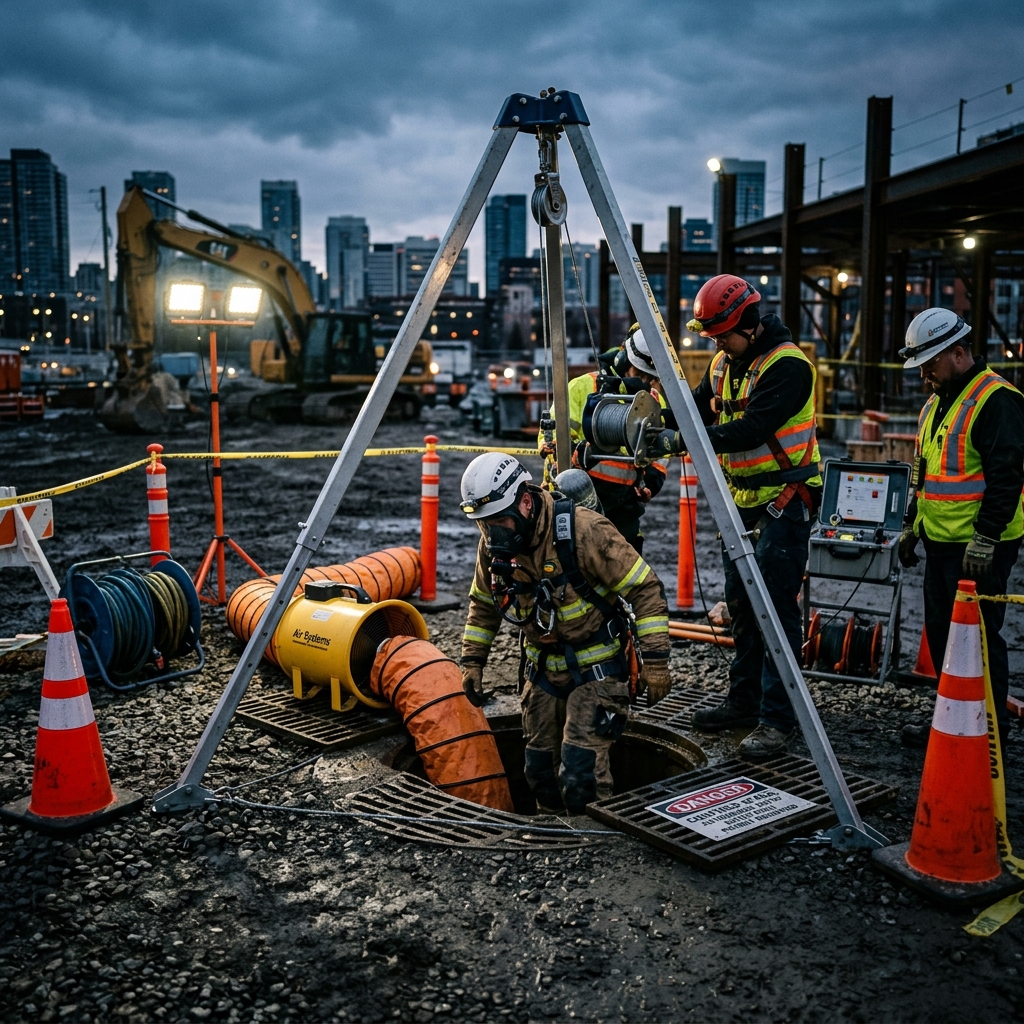
- Specialized Ventilation Setup & Air Quality Management
- Dedicated External Hole-Watch Supervision Officers
- Emergency Retrieval Planning & Rescue Systems Setup
Navigating the Most Dangerous Work Environments
Confined spaces require specialized safety frameworks and strict adherence to regulations. Whether you are working on massive Department of Water and Sanitation (DWS) infrastructure or local reticulation pipelines, we ensure full compliance so your teams can operate safely in hazardous atmospheres.
Our Confined Space Protocols
We deploy specialized monitoring and safety strategies to eliminate hazards during critical underground operations. Our protocols are designed to keep your teams completely safe in high-risk zones.
Atmospheric Testing
Continuous atmospheric testing and monitoring to detect toxic gases or oxygen deficiency before entry.
Ventilation Systems
Strategic ventilation system setup and management to maintain completely safe breathing environments.
Hole-Watch Supervision
Dedicated, highly-trained hole-watch supervision ensuring constant visual and verbal contact at all times.
Emergency Retrieval
Immediate deployment of specialized retrieval systems and comprehensive emergency rescue planning.
Frequently Asked Questions
Read crucial details about safety procedures in high-risk confined spaces, toxic gas testing, and rescue coordination.
Require extreme-risk compliance? Get Compliance Support →
A confined space is typically a fully or partially enclosed area not designed for continuous human occupancy, where atmospheric hazards or physical risks can occur due to its construction or the work being done inside.
These are severe risks found in confined spaces, including the accumulation of flammable gases, oxygen deficiency, or airborne contaminants that pose an immediate threat to life.
We implement comprehensive safety measures including rigorous atmospheric clearance testing, hole-watch supervision, advanced ventilation systems, and clear emergency retrieval plans.